
What Is Artificial Intelligence (AI)? A Complete Beginner’s Guide
Artificial Intelligence (AI) is one of the most important technologies in the modern world. It is changing the way people learn, work, communicate, and solve everyday problems. From chatbots and voice assistants to smart cars and image generators, AI is becoming a part of our daily lives.
In this guide, we will explore what artificial intelligence is, how it works, its different types, real-world applications, advantages, disadvantages, and future possibilities.
What Is Artificial Intelligence?
Artificial Intelligence, commonly known as AI, is a branch of computer science that focuses on creating computer systems capable of performing tasks that typically require human intelligence. These tasks include learning from data, understanding language, recognizing images, identifying patterns, solving problems, and generating new content.
In simple terms, AI enables computers and machines to perform certain tasks that would normally require human intelligence.
For example, AI-powered tools can answer questions, translate languages, recommend products, create images, summarize documents, and assist with programming.
According to IBM’s guide to artificial intelligence, AI includes technologies that enable machines to simulate aspects of human learning, problem-solving, creativity, and decision-making.
How Does Artificial Intelligence Work?
Artificial intelligence works by processing data and using algorithms and trained models to identify patterns, generate predictions, or produce responses.
The general process involves the following steps:
1. Data Collection: AI systems use relevant information, such as text, images, audio, or numerical data.
2. Training: During training, an AI model learns patterns and relationships from examples.
3. Processing: When a user provides a question, image, or instruction, the system processes the input using its trained model.
4. Output Generation: The AI produces a result, such as an answer, prediction, recommendation, image, or other content.
The exact process varies depending on the type of AI system. AI tools can also produce incorrect or misleading results, so important information should be verified.
Types of Artificial Intelligence
Artificial intelligence can be classified in different ways. Here are some important categories.
1. Narrow AI
Narrow AI is designed to perform specific tasks. Most AI applications available today fall into this category.
Examples include facial recognition, spam filters, recommendation systems, and voice assistants.
2. Generative AI
Generative AI creates new content based on instructions and patterns learned during training. It can generate text, images, audio, video, and computer code.
Examples include AI writing assistants, image generators, and AI-powered content creation tools.
3. Machine Learning
Machine learning is a branch of AI that allows computer systems to learn patterns from data and make predictions or decisions without requiring a separate manually written rule for every situation.
It is used in fraud detection, product recommendations, forecasting, and many other applications.
4. Deep Learning
Deep learning is a specialized area of machine learning that uses neural networks with multiple layers to learn complex patterns. It supports applications such as speech recognition, image analysis, and modern generative AI.
5. Artificial General Intelligence
Artificial General Intelligence (AGI) refers to a proposed form of AI that could perform a broad range of intellectual tasks with capabilities comparable to humans. It remains a research goal rather than an established, generally available technology.
Examples of Artificial Intelligence in Everyday Life
AI is used in many products and services that people interact with every day.
- AI Chatbots: Answer questions, explain concepts, and assist with writing.
- Search Engines: Help organize information and improve search experiences.
- Voice Assistants: Recognize spoken commands and respond to requests.
- Recommendation Systems: Suggest videos, music, products, and other content.
- AI Image Generators: Create images from written descriptions.
- Translation Tools: Translate text and speech between languages.
- Navigation Applications: Help estimate routes and travel times using data and predictive systems.
- Smart Devices: Support features such as voice control and automated home functions.
These examples show how AI can make certain digital tasks faster and more convenient.
Applications of Artificial Intelligence
Artificial intelligence is being used across a wide range of industries.
AI in Education
AI tools can explain difficult topics, generate practice questions, help students organize notes, and support personalized learning. Students should still check the accuracy of AI-generated answers.
AI in Healthcare
Healthcare professionals can use AI-assisted systems to analyze medical images, identify patterns in health data, and support research. Medical decisions require appropriate professional oversight.
AI in Business
Businesses use AI for customer support, data analysis, forecasting, document processing, and workflow automation.
AI in Digital Marketing
AI can assist with keyword research, content planning, audience analysis, advertising optimization, and social media ideas. Human review remains important for quality and accuracy.
AI in Website Development
AI-powered coding tools can help developers write code, explain programming concepts, identify errors, and create website prototypes.
AI in Entertainment
AI can assist with image creation, video production, audio processing, game development, and personalized content recommendations.
Advantages of Artificial Intelligence
Artificial intelligence offers several potential benefits:
- Automation: Helps automate repetitive tasks.
- Speed: Processes large amounts of data quickly.
- Productivity: Assists people with writing, research, planning, and analysis.
- Personalization: Supports tailored recommendations and learning experiences.
- Creativity Support: Helps users explore ideas and create digital content.
- Data Analysis: Identifies patterns that may be difficult to detect manually.
The benefits depend on the application, the quality of the data, and how the technology is used.
Disadvantages of Artificial Intelligence
Despite its benefits, AI also has limitations and risks.
Incorrect Information: AI can generate answers that sound convincing but are inaccurate.
Privacy Risks: Sharing sensitive personal or business information with AI services can create privacy concerns.
Bias: AI systems can reproduce biases present in their training data or design.
Employment Changes: Automation may change job responsibilities and reduce demand for some tasks while creating demand for new skills.
Overdependence: Relying entirely on AI can reduce the need for independent verification and critical thinking.
Responsible AI use involves checking important outputs, protecting private information, and maintaining appropriate human oversight.
What Is the Difference Between AI, Machine Learning, and Deep Learning?
These terms are related, but they do not mean exactly the same thing.
- Artificial Intelligence: The broad field of creating systems that perform tasks associated with human intelligence.
- Machine Learning: A subset of AI that learns patterns from data.
- Deep Learning: A subset of machine learning that uses multilayer neural networks.
In simple terms, deep learning is part of machine learning, and machine learning is part of the broader field of artificial intelligence.
The Future of Artificial Intelligence
Artificial intelligence is expected to continue developing in areas such as education, healthcare, scientific research, robotics, business automation, and software development.
Future AI systems may help people perform more complex tasks, analyze information more effectively, and develop new products and services. At the same time, questions about privacy, fairness, safety, employment, and accountability will remain important.
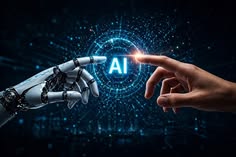
The full form of AI is Artificial Intelligence. AI is a technology that enables computers and machines to perform tasks such as learning, understanding language, answering questions, solving problems, and creating new things.
In simple words, AI is a technology that enables computers to perform certain tasks that typically require human intelligence.
The impact of AI will depend not only on technological progress but also on how responsibly people and organizations develop and use it.
Conclusion
Artificial Intelligence is a powerful technology that enables computers and machines to perform a wide range of tasks involving data analysis, language processing, pattern recognition, and content generation.
Understanding AI, its applications, benefits, and limitations can help beginners make better use of modern technology. Whether you are a student, business owner, developer, or curious learner, exploring AI is a useful step toward understanding the digital world.
As AI continues to evolve, learning how it works and using it responsibly will become increasingly valuable.
Frequently Asked Questions (FAQs)
1. What does AI stand for?
AI stands for Artificial Intelligence.
2. What is artificial intelligence in simple words?
Artificial intelligence is technology that enables computers and machines to perform tasks that typically require human intelligence.
3. Is ChatGPT an AI tool?
Yes. ChatGPT is an AI assistant that can help with questions, writing, learning, coding, and other supported tasks.
4. Is artificial intelligence used in daily life?
Yes. AI is used in many everyday services, including translation tools, recommendation systems, spam filters, voice assistants, and navigation applications.
5. Can AI make mistakes?
Yes. AI systems can provide inaccurate, incomplete, or misleading information. Important results should be checked against reliable sources.
6. Can beginners learn AI?
Yes. Beginners can start by learning basic AI concepts, trying accessible AI tools, and gradually exploring topics such as machine learning and programming.
7. Will AI replace humans?
AI may automate or change some tasks, but its overall effect varies by occupation and industry. Human judgment, creativity, communication, and oversight remain important in many areas.
Learn more about AI and explore how artificial intelligence can help you study, create, and work more effectively.
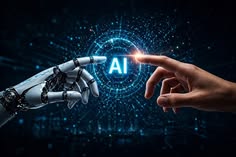
The full form of AI is Artificial Intelligence. AI is a technology that enables computers and machines to perform tasks such as learning, understanding language, answering questions, solving problems, and creating new things.
In simple words, AI is a technology that enables computers to perform certain tasks that typically require human intelligence.
- What Is Artificial Intelligence? (AI क्या है?)
- How Does AI Work? (AI कैसे काम करता है?)
- Types of Artificial Intelligence
- Best AI Tools for Beginners
- Advantages and Disadvantages of AI
- Uses of AI in Daily Life
- Difference Between AI, Machine Learning and Deep Learning
- Future of Artificial Intelligence